HTML

stream121
Product Management :: Product Marketing


03 November, 2010

State of The Blogosphere

Technorati CEO Richard Jalichandra gave his annual State of The Blogosphere presentation (click to view on Scribd) at the ad:tech conference.

The power of social media: Brutal, compelling evidence as to the power that the two giants of social media, Facebook and Twitter, have on website traffic. (Slide 20)


Why use Twitter
The The top five reasons for using mico-blogging ie Twitter (Slide 18):
  1. To promote my blog
  2. To bring interesting links to light
  3. To understand what people are buzzing about
  4. To keep up with news and events
  5. To interact with readers of my blog

21 October, 2010

Opera 11 is coming soon


Well, you would have thought that by v11 of a product, it would have become pretty insipid. The Opera browser remains at the very forefront of internet technology - it generates raw innovations that appear in other browsers in 18 months to 2 years' time.

And, in case you can't tell, I'm a huge Opera fan.


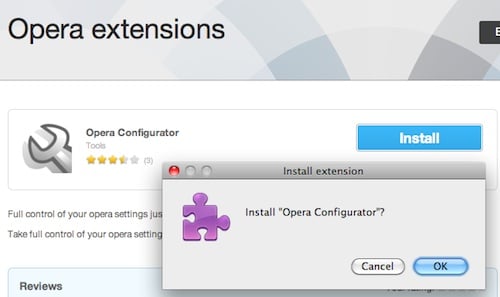
This review from The Reg, Inside Opera 11: extensions and benchmarks, is generous - extensions are one area that Opera has lagged. I only hope that enough developers engage with Opera's platform - I don't have a single Opera Widget installed, as they appear to be only fripperies. I hope extensions are different.

10 October, 2010

Detecting Contagious Outbreaks Through Social Networking

Fascinating (and compelling) methodology that has demonstrated to be valid - that you can detect the likelihood of contracting a contagious outbreak of an epidemic by monitoring the health of your friends.

Dr. James Fowler, Professor of Medical Genetics & Political Science at University of California (San Diego) proposed that people who have more friends will tend to become infected by contagions sooner than others with fewer friends. See Social Network Sensors for Early Detection of Contagious Outbreaks.

To test the method, Dr. Fowler and his team recently studied an H1N1 flu epidemic at Harvard College. Results showed that by simply monitoring the friends of randomly selected individuals, two weeks of advanced notice could have been given for this particular outbreak. Thus, monitoring friends is a good way to alert oneself at being at risk - better than checking your own symptoms.

30 September, 2010

Google's URL Shortener has QR Code functionality


Mentioned previously as a beta feature (Google adds QR Codes as part of URL Shortener), but now Google has officially launched its URL Shortener , Goo.gl with the QR Code generator. (See Techcrunch report.)

If you simply add “.qr” to the end of any goo.gl URL, it will create a QR code. Scanning this with any QR code reader will take you to the URL.

23 September, 2010

Top patent holders in Mobile Advertising

My previous post, Jockeying for position in Mobile Patent race, asked where Apple was in this race.

Alan Moore in in Mobile Patent Wars 2 answers my question:
  1. Yahoo
  2. Microsoft
  3. Google
  4. CVON Innovations
  5. Nokia
  6. NEC
  7. Qualcomm
  8. IBM
  9. AT&T
  10. Sony
  11. Motorola
  12. Sony Ericsson
  13. Hewitt Packard
  14. Hitachi
  15. Alcatel-Lucent
Of note, CVON is selling their portfolio on 11th November.

06 September, 2010

Jockeying for position in Mobile Patent race

Alan Moore writes on the Mobile Patent Wars. Here are some interesting snippets from this post:
  • The fact of the matter is that patents are all too often an after thought in many M&A process, RIM/Apple/Nokia/HTC have all been involved. Yet more multinationals are getting into patent wars, as we see today, using patents, to protect their competitive advantage.
  • More than US$1.7 billion was spent in 2008 on mobile advertising, and this number is expected to grow to more than US$12 billion by 2013.
  • More significantly, one in seven media minutes is spent with mobile already today. 
So those that own patents in the following areas would have their fingers on the levers of this burgeoning market. Alan reports that the following sectors would be valuable:
  • In-application advertising
  • Message tagging advertising
  • Mobile search advertising
  • Direct marketing to mobile devices
  • Social media and instant messaging
  • Pay per action in mobile devices
  • Advertising campaign optimization in mobile devices
Finally, CVON is selling the world's fourth largest mobile advertising patent portfolio  behind Yahoo!, Microsoft, and Google. It consists of more than 300 patents and patent applications across 58 patent families. (Side note: where's Apple in this race??)

So acquiring this little lot would be the equivalent of swallowing a jar full of steroids in the mobile patent wars for any of the existing competitors, I assume??

25 June, 2010

Agile Software Development - put in historical perspective

I went to the Cambridge Product Management Network last night on 'Product Management in the Agile World' from Roman Pichler, author of Agile Product Management with Scrum: Creating Products that Customers Love.

Agile in a historical perspective
Paul Walsh made a very insightful comment:

Agile (2000s) = Rapid Application Development (1980s) + User Experience (1990s)

RAD was all about prototyping, customer involvement and fast feedback. BUT those prototypes tended to be technology prototypes and didn't include what the customer actually received or experienced, so that they could provide decent feedback and steer the development effectively.

Paul and I nattered afterwards and both agreed that Agile wasn't best for v1 development, but much better for enhancement and product extensions.

On big, hairy feature enhancements
In fact, Agile means that you tend to avoid big, hairy feature enhancements because by their nature, they require lots of work which can't fit into a 6 week release cycle. So you tend to pick off the 'easy' incremental enhancements while the whole product slowly degrades whilst product management frets about 'biting the bullet'.

This problem is only solved by kicking out a research project that is independent of the development cycle. Agony and paralysis occurs when development needs SOME of the research project NOW and development starts cherry picking out of research. Yuk - a big management and technology sink hole, but sometimes inevitable.

Platforms
Also Agile was much harder in platform + products environment (ie products that were dependent on a platform on which other product relied upon) rather than a single product development track. I'm not saying it isn't possible, simply harder - particularly if the other products on which the platform relies have difficult development cycle times.

Thinking about it, for the same reason, products that require VAR /distribution & delivery partners mean that the feedback cycle is longer and more at arm's length than the development cycle demands. This means that there are lots of incremental releases that never make it into the market / customers' hands.

28 May, 2010

Opera's State of the Mobile Web Report

Some interesting stats from Opera's State of the Mobile Web Report from April 2010 (courtesy of Opera itself):
  • In April 2010, Opera Mini users generated over 398 million MB of data for operators worldwide (ie compressed data). Data in Opera Mini is compressed by up to 90%. If this data were uncompressed, Opera Mini users would have viewed over 3.7 petabytes of data in April.
iPhone Stats
  • Opera Mini for iPhone was downloaded more than one million times in its first day of availability on 14th April 2010.
  • In April 2010, there were more than 2.6 million unique users of Opera Mini on the iPhone (from April 13-30). (That's 17 days after launch!). 

27 April, 2010

Salesforce acquires Business Contact Directory Jigsaw For $142m

  +  

Salesforce.com has agreed to acquire Jigsaw which provides crowd-sourced contact information for business. The deal is worth approximately $142 million in cash, plus a performance-based earn out of up to 10% of the purchase price, according to Techcrunch.

I derided Jigsaw when it first launched in April 2004 (see my blog post), as it allows users to buy other people's contact information, without their permission.

The model has changed - but I still dislike the whole concept:
  • Users are no longer paid cash to upload contacts. Instead they receive points that can be used to download contact other people's contact information (ie not real currency, but a virtual one).
  • It is now positioned as contact information cleanup tool
  • Users can now see if their personal information has been uploaded, and there is a process to have it removed, at least temporarily.
  • Revenue was rumored to be around $30 million per year at the end of 2009.
  • 1.2 million users with 800 corporate customers.
  • Database of 21 million contacts at nearly 4 million companies.
  • The company had raised $18 million in venture capital to date.

07 April, 2010

Google adds QR Codes as part of URL Shortener


Not to be outdone by Facebook adding QR Codes (see recent post), Google has enabled QR Codes as part of the URL Shortener according to this Techcrunch report: Google Continues To Embrace QR Codes, Integrates Them Into Its URL Shortener.

So Google has a URL Shortener Goo.gl (yawn) which launched in December 2009 (Facebook And Google Get Into The Short URL Game). Today, Google added a very elegant feature: if you add “.qr” to the end of any shortened link, this will generate a QR code for it. For example, the link http://goo.gl/SJhz would become http://goo.gl/SJhz.qr.

Google are a clearly massive fan of QR Codes and this is an easy way to propagate them.

17 March, 2010

Facebook enables QR Codes

So, is it me or has interest in QR Codes just been punted into the fore? Clearly, when a service provider like Facebook adds this functionality (Facebook Kicks Off Implementation Of QR Codes), then it is going to have an impact in usability.

I don't know the legal situation with the use of QR codes in the US. Neomedia represents the IP owner with the most clout - justified or not. However, once again, they appear to be in trumpoil.

New home for this blog

Due to changes in Blogger's service, I am obliged to move this blog from its current location at www.stream121.com/go_for_it to a new home: http://blog.stream121.com

SO, please update your RSS feed to match this new address.

Thanks!

16 March, 2010

Facebook adds QR Codes

Clearly, when a service provider like Facebook adds this functionality to its service, then it is going to have an impact in usability. (See Facebook Kicks Off Implementation Of QR Codes)
According to the Techcrunch report then there are two  types of QR codes:
  1. a personal barcode which would (I assume) return a basic profile + link to your profile 
  2. “status QR barcode”. which would (I assume) return your current status when read.

22 February, 2010

Six Rules of Product Roadmaps

Below is a presentation that I first gave to the Cambridge Product Management Network at their February 2010 meeting.

Summary:
  • definition
  • six rules of roadmaps
  • disclosure and trust


If this embed doesn't load properly, please see this presentation on authorSTREAM's site.

18 February, 2010

Fitting Products to Markets (and vice versa)

Introduction

I frequently get asked to review other people's product ideas, concepts and businesses. As my background is software and internet businesses, this blog post looks at the five areas which often get overlooked:
  1. Getting the Job Done
  2. Competitive Analysis
  3. Supply Chain Analysis
  4. Routes to Market and Market Entry
  5. Sustainable Revenue
Let's look at each one in turn, but quickly you'll appreciate how they are all interrelated.

Getting the Job Done

Your Value Proposition is the offering that you make to your marketplace. Your value to the person that uses or pays for your product or service indicates the price you can charge. ALWAYS, the value of your product is based on the pain that your potential customer has.


I quote from SHAKESPEARE from Richard III, Act 5. Scene IV. As Richard II is fighting in the Battle of Bosworth, his horse is killed.
A horse! a horse! my kingdom for a horse!
Great value is placed on a solution to a great pain.

The best thinking in my opinion is from Clayton Christensen (a great thinker who sadly passed away in early 2020), a Harvard Business School professor and author of the Innovator's Dilemma and the Innovator's Solution (two excellent books which is why I have linked to them on Amazon!). 

An entrepreneur should evaluate his / her product or service through the perspective of a customer wanting to solve a problem: 'What can I buy (or hire) to get this job done for me?'. These are the problem statements that users need your solutions for. In analysing the pain, you frequently discover that the pain can be solved in a variety of ways (or the pain can be endured).

Question: is the pain significant enough for people to pay for it?

Competitive Analysis

Firstly, it is much, MUCH safer to assume that you have competitors: either you haven't found them (yet) or the competition is just about to appear over the horizon.

Searching for competitors

I recommend you really look hard for your competitors:
  1. Using the internet - not just the terms that you use to describe to your product or service, but for words that describe the problem that your potential customers might be enduring. See 'Getting the Job Done' in the previous section.
  2. Sniff out 'players' in your wider sector. By 'players', I don't mean direct competitors, but participants in closely associated sectors.
Example of Players: You have developed a piece of wizardry that improves images displayed in Microsoft Word. Direct Competitors would be Microsoft itself and companies that provide 3rd party add-ons to Microsoft Word. Other 'players in associated sectors' might be companies that make printers (eg HewlettPackard) or computer screen manufacturers (eg Dell). The key question to ask yourself is 'Will my invention hurt or harm these players?'

Supply Chain Analysis

This leads nicely onto supply chain analysis.

If your new product or service is successful, then other players in the supply chain will react to your success. Some will benefit, some will be negatively impacted. By analysing all the participants that in the supply chain, you may well discover that:
  1. there are other cracks in the market that your product/service may be better suited for
  2. there are other potential partners or distributors who will benefit from your product/service and 'should' support your product's entrance into the market place.

Route to Market

Supply Chain Analysis leads me onto Routes to Market and Market Entry.

Participating with a partner has a number of huge advantages:
  1. You can use your partners' or distributors' marketing budge to tell them about your product / service.
  2. Their endorsement provides credibility to your product / service and can both accelerate sales and shorten the sales cycle.
  3. Route to revenue and ROI (Return On Investment) should be much faster.
  4. There are additional financial advantages too: if you're a very young company, your partners may be prepared to invest in your business, if they will significantly benefit from accelerating your product's arrival at the marketplace.

However working with partners does have disadvantages:
  1. They might steal your idea.
  2. You may have to spend considerable amount of time 'selling' your proposition to your partner/distributor. Their offering and how they present the combined offering to the market will have to be modified - all of which takes time. If your solution is any way competitive, these potential partners/distributors will be protective of their markets and customers.
  3. You will lose some or all of the direct relationship with your end customer - this is a really important relationship with the customer in order to receive unadulterated feedback.
  4. It will most probably take more time to receive the first revenues from your product or service as the revenue has to turn more cogs and gears in other organisations (which you can't control) before money starts to flow into you.
  5. General lack of control! Usually your partners are much bigger than you and their processes are much slower. It is likely that you are one of many partners with whom they operate and being new, you have to demonstrate ability and trustworthiness.

Sustainable Revenue

Good news: by this stage you have done most of the hard work! Revenue MUST be sustainable: investors and partners need to have confidence that you and your product will be around years into the future. A really good analytical technique about profitability in an industry is to use Porter's Five Forces Analysis, a concept devised originally by Michael Porter, a Harvard Business School Professor in the 1979. 

Porter's Five Forces Analysis is not simple, but it is very worthwhile as it gives you a profound understanding of your market and its dynamics. I recommend that you undertake this analysis twice: once as your market / sector/ industry stands today and then a second time, as if in the future, once you have launched your product or service and this is very successful.

Key Questions:
  • How will your competitors react?
  • How do you think the market will react?
  • Who will own the largest slice of the revenue pie now - who will benefit and who won't?

My own litmus test is to ask: are there any Goliaths in the industry who could simply roll over on morning and squash you?? Phrases like 'We're gonna beat Google hands down' fill me with fear!

SWOT Analysis

Top Tip: In conjunction with your Five Forces Analysis, have scribble pad at hand divided into four quadrants: Strengths and Weaknesses (of your idea), Opportunities and Threats (in the competitive landscape). This is commonly known as a SWOT Analysis.

As you undertake the Five Forces Analysis, you'll see other product opportunities or other partners that you haven't thought of, but don't deviate from your Five Forces Analysis, but return to these ideas later!


The Perfect Cancer Drug - an example of Sustainable Revenue

My own platinum standard for sustainable revenue is the ideal cancer drug with the following characteristics:
  • has an immediate beneficial effect and insignificant side effects
  • and the producers receive much public acclaim and publicity for their breakthrough
  • is addictive - therefore users become dependent
  • the human body builds up a tolerance to the drug. As the treatment program continues, users require more and more of the drug. However, the tolerance should be mild and builds up over time, otherwise it may attract too much attention from regulators.
  • importantly, the drug doesn't eradicate the cancer, but prolongs life.
  • surrounded by a 'wall' of patents - no-one else can copy the drug.

Can your product or service build in as many sustainable revenue features of the perfect cancer drug??

Finally...

Keep iterating through this process on a regular basis - the market changes: expectations fluctuate and new players enter the market, technology shifts occur which can reset the rules of business competition. Change is the only thing that is guaranteed!

11 February, 2009

Privacy and Google's Latitude


Google has just released Latitude, a a service that lets you keep track of where your friends are by tracking the whereabouts of their mobile phones.

Latitude is available in 27 countries. The following phones are supported:

  • Android-powered devices with Maps v3.0 and above. G1 users in the US will be receiving Maps v3.0 in a system update soon.
  • Most color BlackBerry devices
  • Most Windows Mobile 5.0 and above devices. Note: Some Windows Mobile devices don’t support cell-ID location detection.
  • Most Symbian S60 devices
  • iPhone and iPod touch devices with the Google Mobile App (coming soon in the US)
  • Many Sony Ericsson devices (coming soon)

(From Pandia)

It is opt-in. Will Google be 'on top' of the privacy issue? 

18 January, 2009

08 January, 2009

News that I didn't get to tell you

There were a host of stories from 2008 that I was just too busy to tell you about. Here are the links to them.

May


Comcast acquires Plaxo

Comcast purchases Plaxo for a rumoured $150-175m. Comcast plans on using to integrate community features on TV, broadband data and phone services.


June

July

September

November

December

13 August, 2008

NeoMedia's patents, New CEO and fund-raising


U.S. Patent Office Rejects All Ninety-Five NeoMedia Patent Claims.

Neomedia, you may remember, owns a large patent portfolio in the field of connecting to internet content using the mobile phone (amongst others). I have taken a dim view of their patents and the impact to the use of QR codes, particularly outside of Japan. See this post which generated some interesting discussion in the comments.

The Electronic Frontier put together a patent busting initiative which overturned the decision in July. See report on their site. (Thanks to Dean Collins for alerting me to this news.)

Other machinations at NeoMedia

An avid follower of this sector, the Pondering Primate noted:

On October 15, 2007, the day before the Patent Office ordered the re-examination, the Chairman and member of NeoMedia's Board resignation became effective.

I noticed that NeoMedia appointed Iain McCready as CEO in May (see announcement). Ian was one of the early folks at Mobiqua in the Scotland who were doing nicely in the mobile ticketing field with their own 2D bar code solution for an excellent niche vertical (nice one!).

Then I noticed that Ian has got off to a flying start by raising $8.7million for NeoMedia (see annoucement) last week. Clearly, someone has a lot of confidence in the new approach - I am told that NeoMedia have been fractious organization in the past.

19 July, 2008

Service interruption


Yep, no posts for ages.
I've been busy with my company, Webmetrics, being acquired by NeuStar (announcement) in January, birth of a baby girl in April and relocation from San Diego back to the UK / Ireland in June.